GDB-1 / Natural hazard protection

A reusable barrier for slips, sediment and debris

The same GDB-1 system used for floodwater can be configured to contain mud, silt, clay and debris, and for landslip, rockfall, avalanche and sandstorm applications.

Reusable. Telescopic. Made in New Zealand.
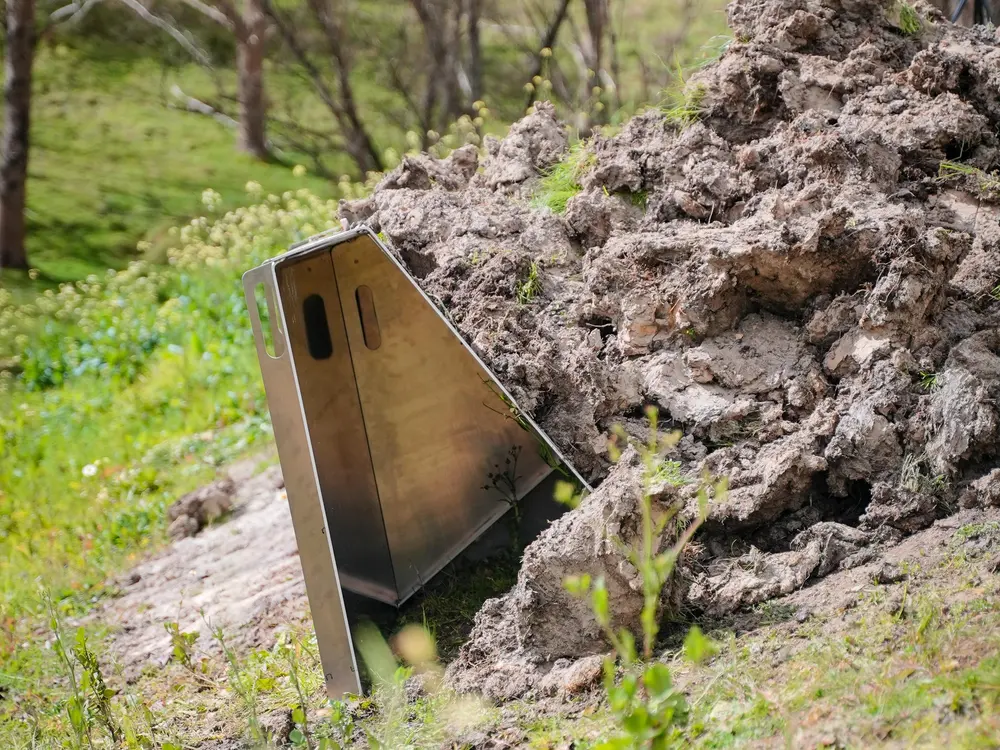
A barrier holding back a pile of wet clay on a grass slope

One system, not a different barrier for every hazard

Unlike single-purpose flood barriers, the GDB-1 has been developed as a versatile protection system supporting a broad range of applications — it is not just for water.

Each unit is a concave A-frame shell. Nested sections are identical profiles offset by plate thickness — not scaled copies — so they telescope out to the distance required, then retract for compact storage and transport.

When the event has passed, the barrier is retracted, cleaned and prepared for future deployment rather than discarded.

Natural hazard uses
  • Landslides and slips
  • Rockfalls
  • Avalanche control and protection
  • Sandstorm and drifting-sand control
  • Silt and sediment management
  • Mud, silt, clay and debris containment

Why it suits hazard response

Designed to be set up quickly where conditions are changing, and recovered for use at the next site.

Strong and impact-resistant

Built to take the load of moving water, debris and accidental contact — and not just for water.

Reusable across incidents

A long-term operational asset, not a single-use consumable.

Easy to retract and recover

Retracted, cleaned and prepared for the next deployment rather than discarded.

Planned or emergency

Suitable for scheduled works as well as unplanned response.

Patented innovation

Our proprietary defence barrier technology is protected by patent.

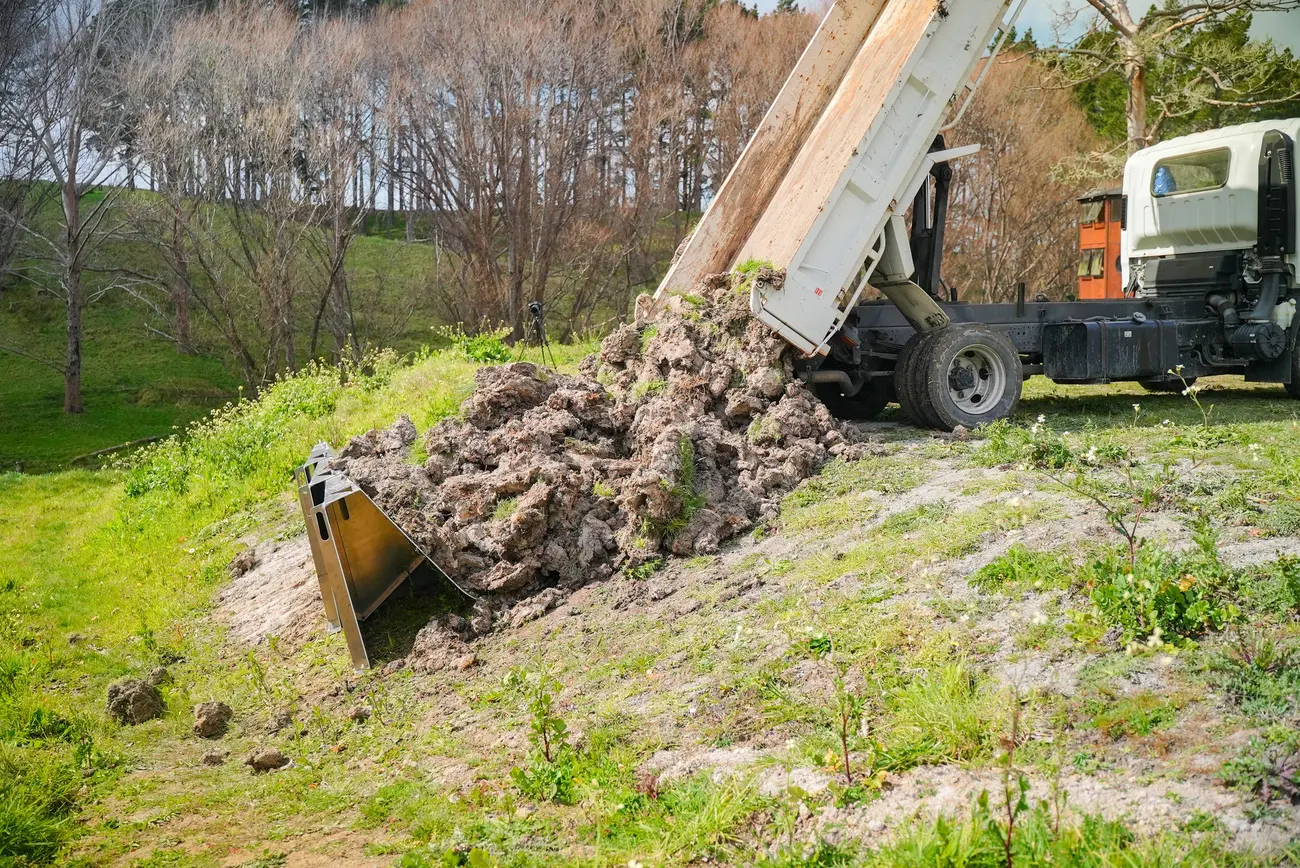
A tipper truck dumping wet clay onto a barrier on a grass slope during impact testing
Prototype testing

Tested with six tonnes of wet clay

Practical testing relevant to slips and sediment has included:

  • A direct impact involving six tonnes of wet clay
  • Exposure to water, mud, silt and debris
  • Static water-retention testing
  • Water-containment testing showing minimal penetration, where any occurred

Performance figures are drawn from practical prototype testing. Full test documentation is available on request.

Common questions

Straight answers about the GDB-1 for natural hazard protection.

Can the GDB-1 contain landslips and mud?

The system can be configured to contain mud, silt, clay and debris, and for landslide, rockfall and sediment-management applications. Practical testing has included a direct impact from six tonnes of wet clay.

Is the GDB-1 only for flooding?

No. The same system is configured for natural hazards such as landslips and sediment control, for temporary fire-control walls, and for traffic management, crowd control and site separation.

Can it be used for planned works as well as emergencies?

Yes. It is suitable for scheduled works as well as unplanned response.

How has it been tested?

Practical testing has included exposure to 9–12 cubic metres of fast-moving water per second, a direct impact from six tonnes of wet clay, and static water-retention and containment testing. Full test documentation is available on request.

Be prepared before the emergency

Arrange a demonstration

See the system in action and discover how rapidly it can be deployed. Contact our team to arrange a demonstration, request technical information, or discuss how the barrier can support your organisation's requirements.

Talk to us

We'll respond within two business days. Technical documentation and test records available on request.
General enquiriesinfo@gdbnz.co.nz