Emergencies develop quickly. Your response must be even faster. The GDB-1 is a multi-purpose flood barrier and defence barrier engineered for rapid deployment in emergency, environmental, infrastructure and public-safety situations.
Rapid to deploy. Engineered to perform. Ready when it matters most.
MinutesLarge sections deployed while conditions are still changing
500°CSpecialist material withstands temperatures up to
9–12 m³/sFast-moving water withstood in practical testing
20 yrLifespan warranty, subject to terms and conditions
How it holds
Thirty-seven seconds, no narration needed. The unit is set down, linked, loaded to its tested flow rate, then lifted out for redeployment — the same sequence a site crew runs.
Set down, apron out — no anchors, no ground works
Units are telescopically deployed to the overall distance you require
Water pushes the face and weighs the apron down
Retract, clean, redeploy — an asset, not a consumable
See it deployed
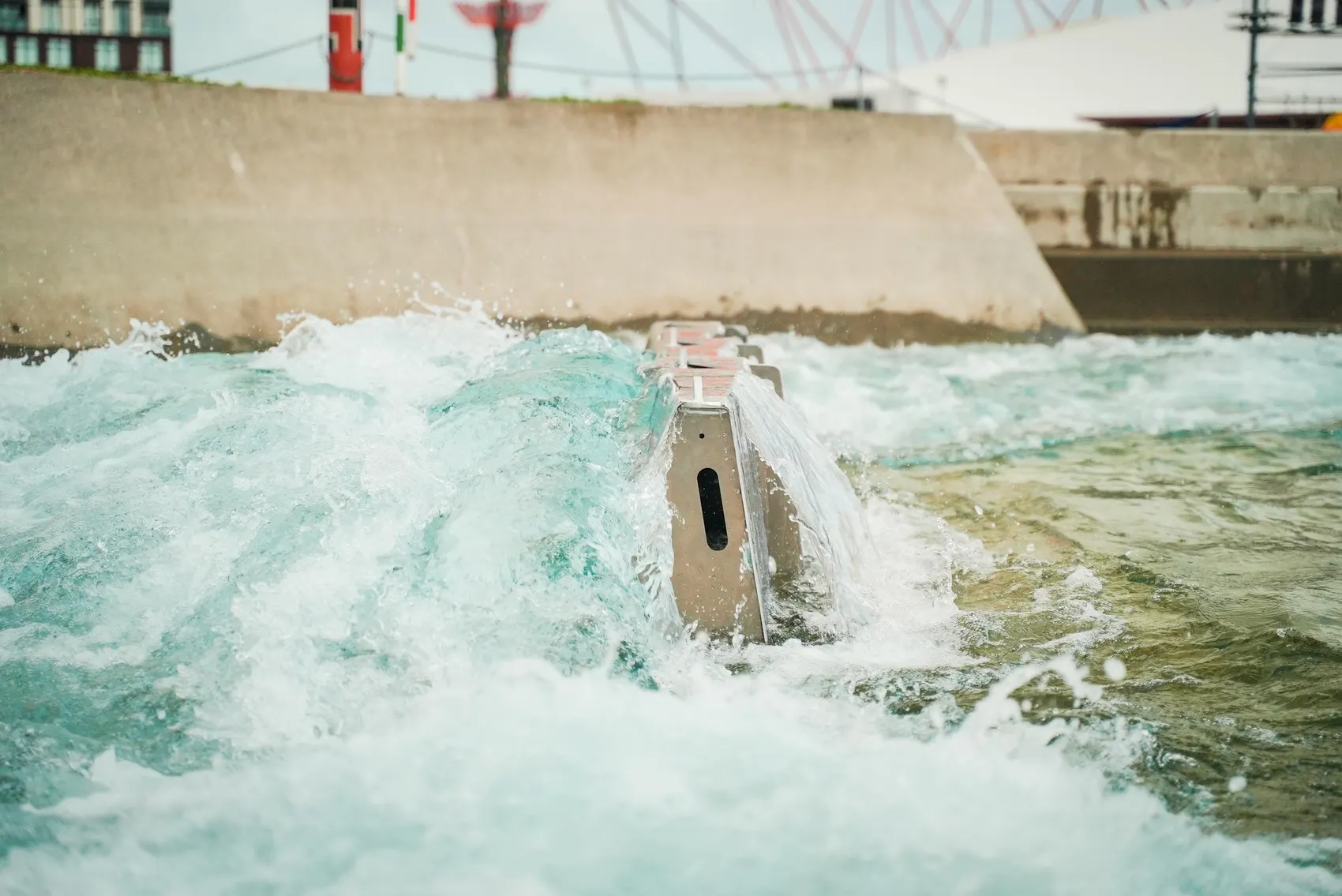
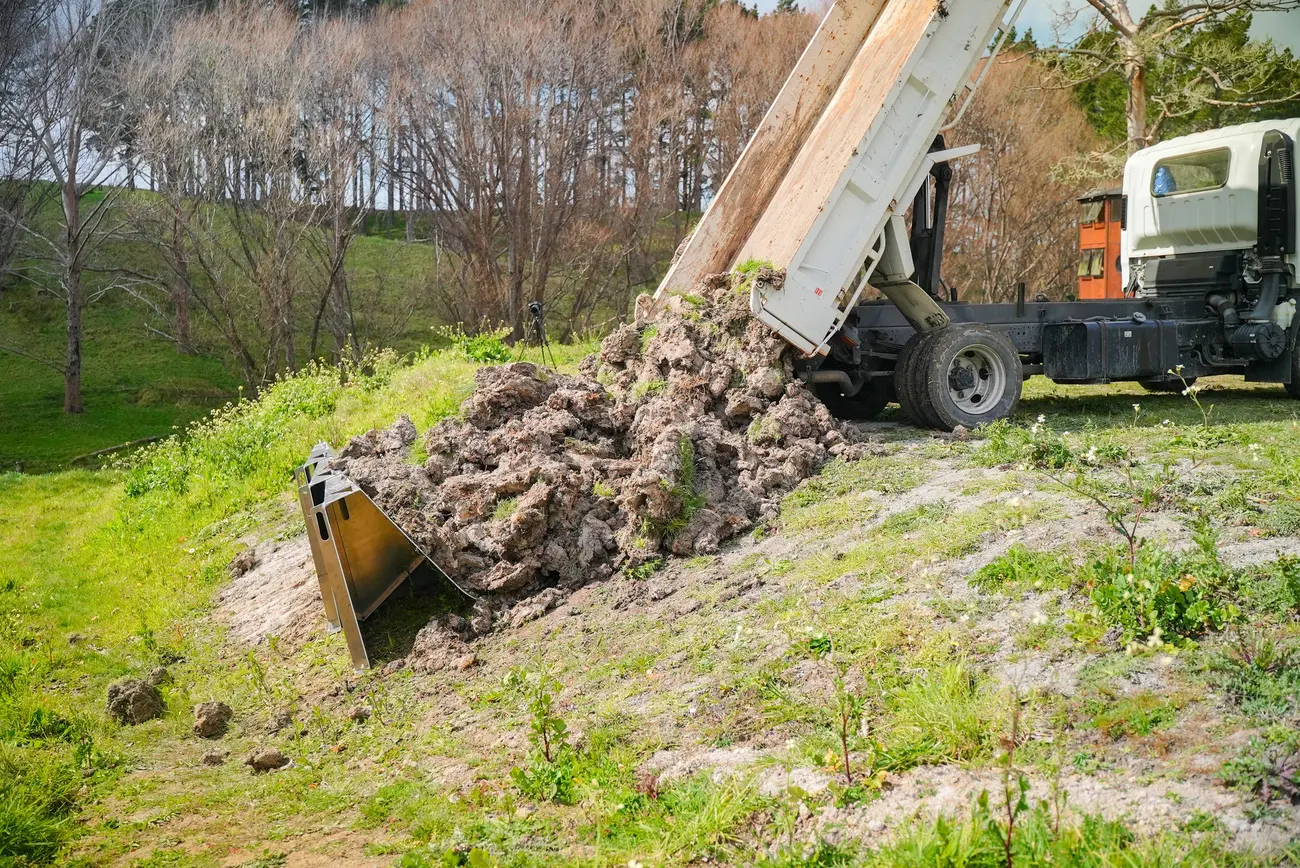
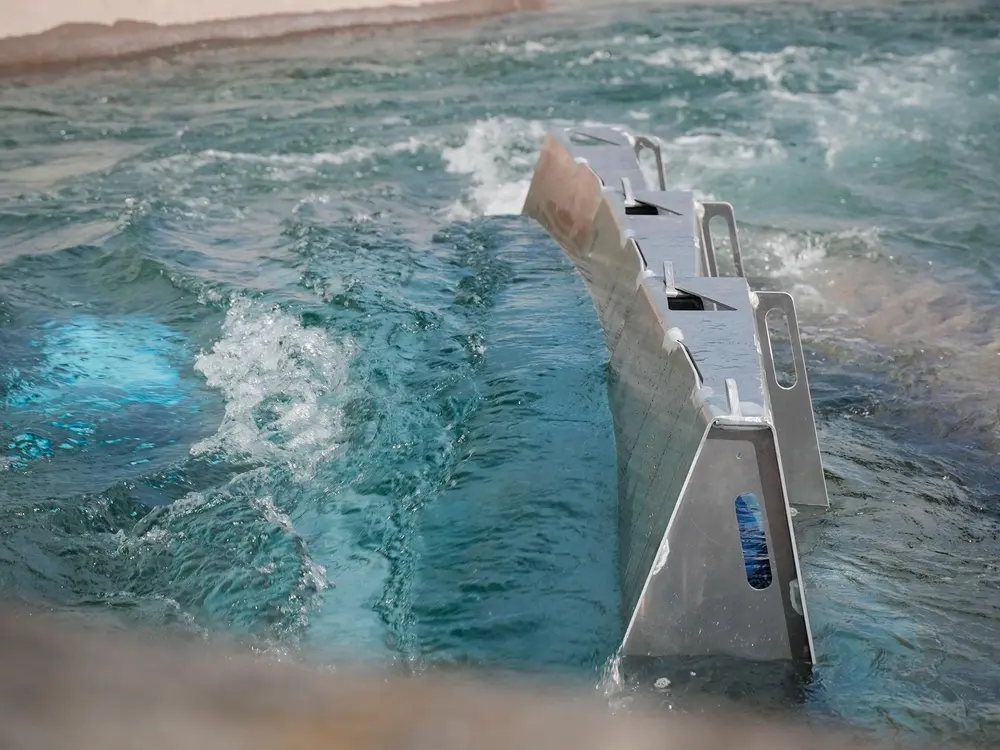
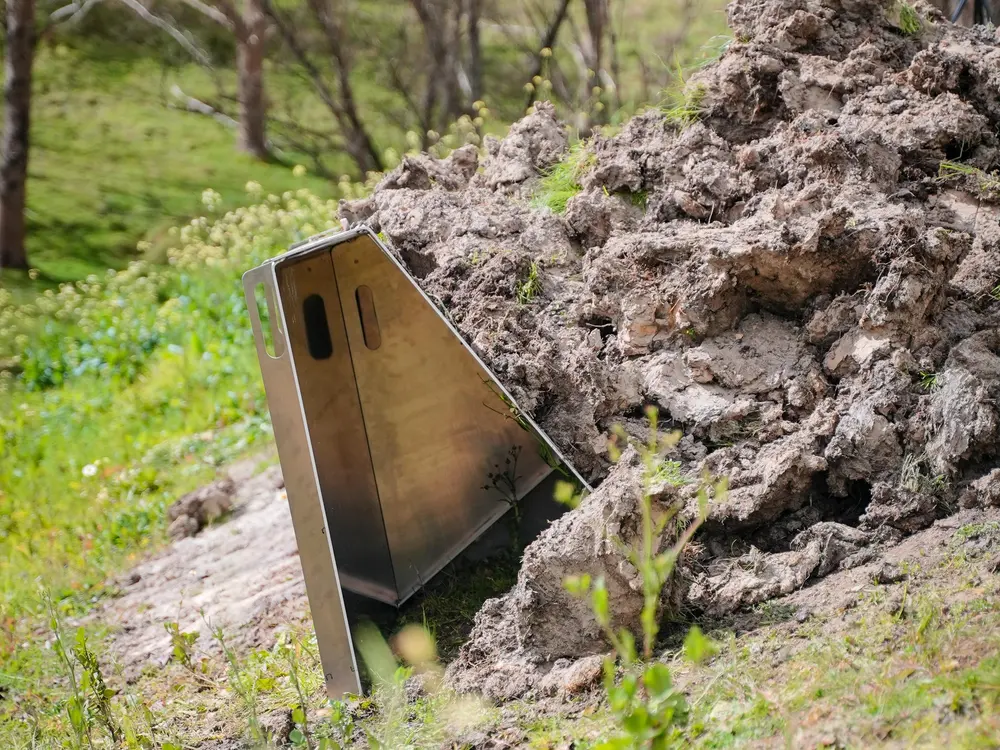
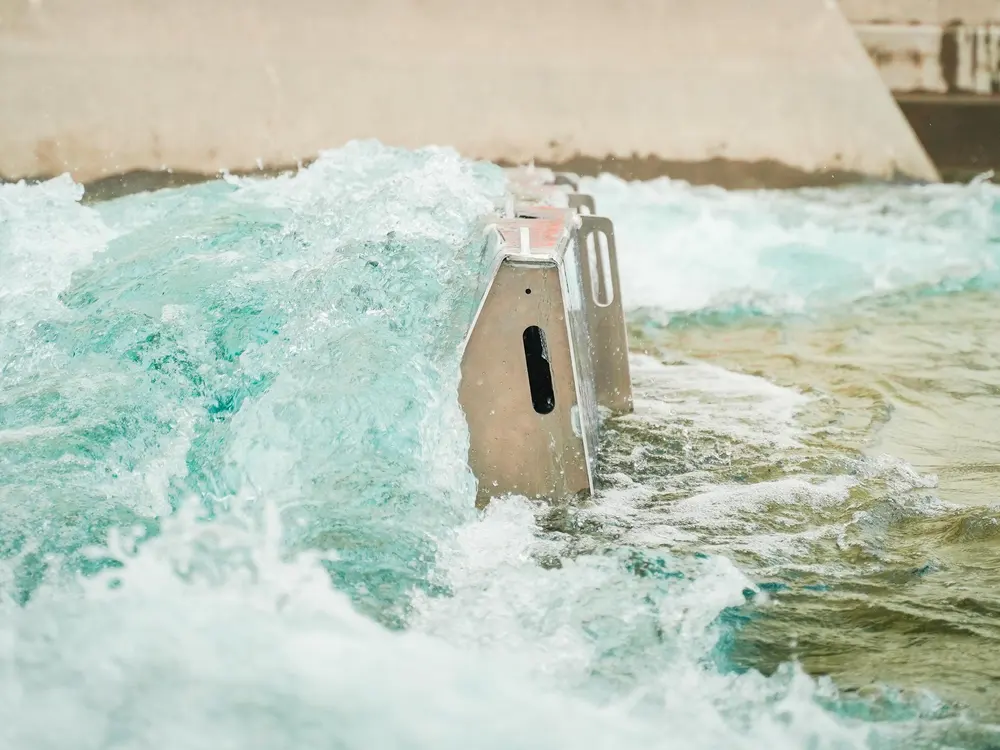
The barrier in practical testing: set up by hand, held against fast-moving water, and struck by six tonnes of wet clay.
1 min 11 s · plays with sound
A smarter approach to emergency protection
Traditional flood barriers and emergency barriers can require significant labour, heavy equipment, lengthy installation and costly disposal after use.
Our all-in-one system offers a faster and more practical alternative. Large sections can be deployed within minutes, enabling response teams to establish protection quickly while conditions continue to change. Once the incident has passed, the barrier can be retracted, cleaned, transported and prepared for future deployment. It is also compact and easy to store, requiring minimal storage space.
Saving time. Saving lives.
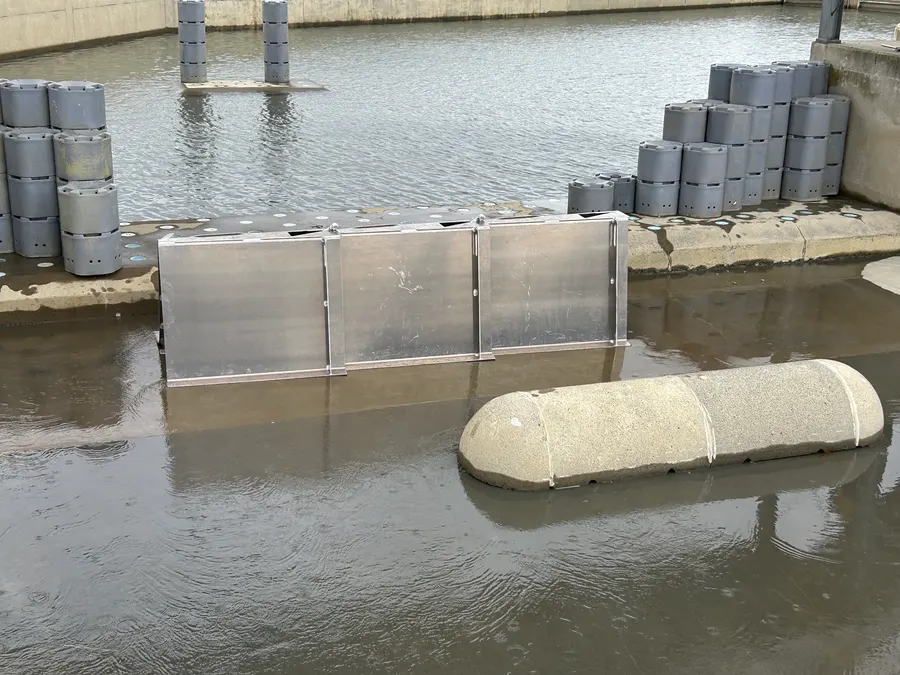
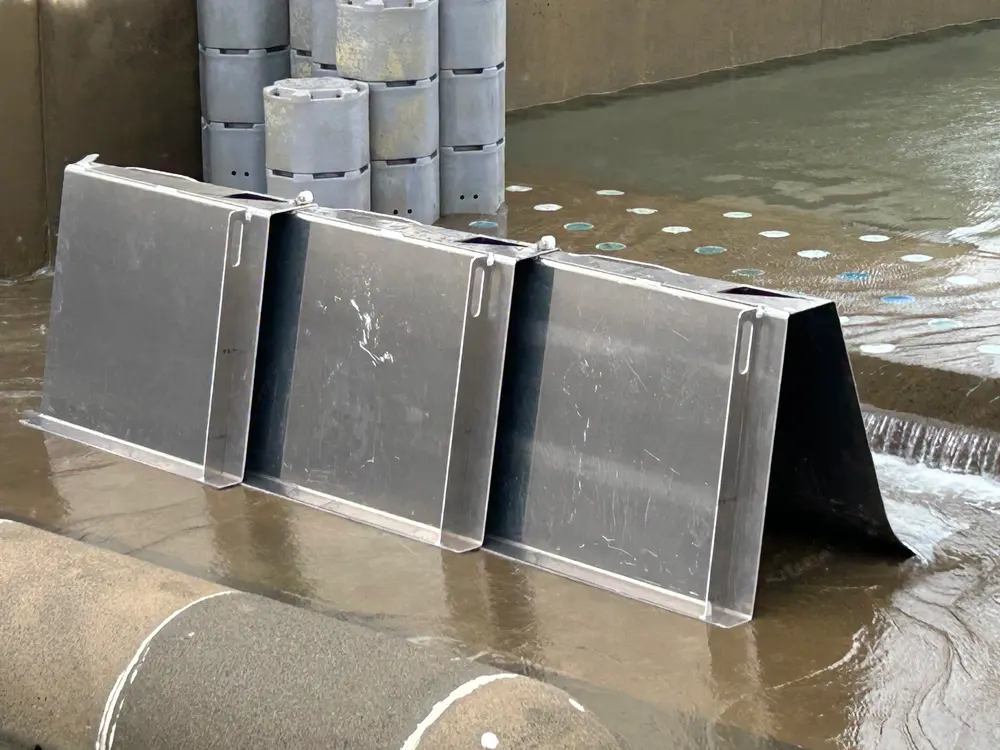
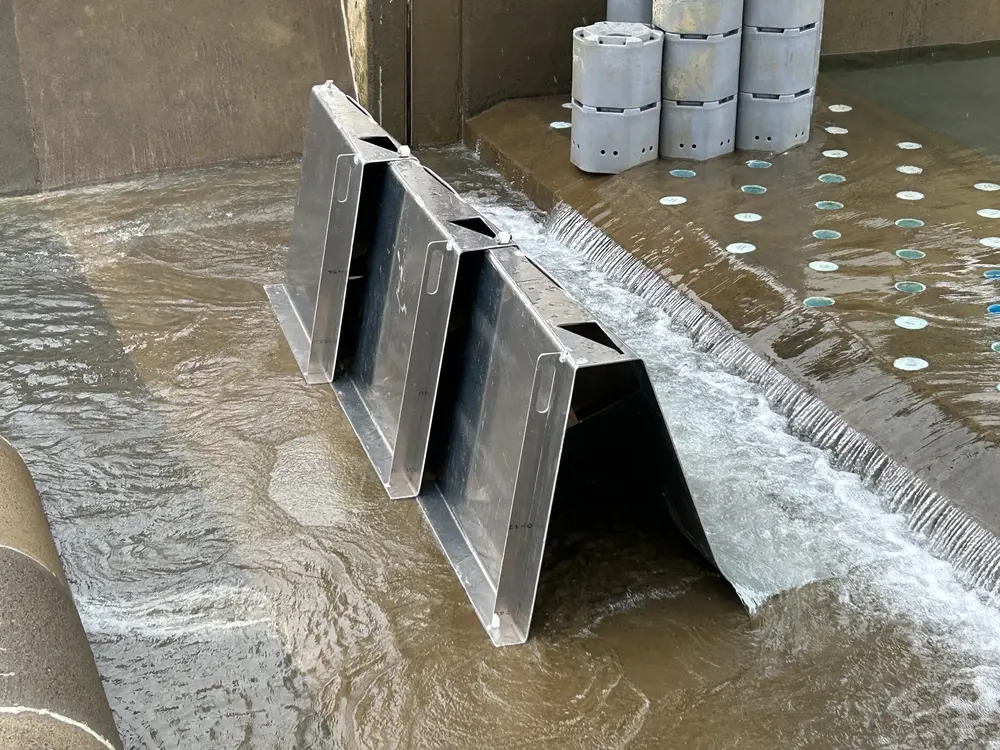
Three telescopic panels, face on — practical testing
The barrier can be configured to
Hold back rising water
Divert fast-moving floodwater
Guide water away from vulnerable areas
Contain mud, silt, clay and debris
Create temporary safety and separation zones
Support wildfire containment and emergency operations
Protect emergency personnel and work crews
Engineered for speed. Designed to protect against the extreme and the unknown.
Its rapid-deployment design reduces setup time and labour requirements, allowing emergency teams to respond efficiently without relying on slow, labour-intensive temporary solutions.
Quick and simple to deploy
Operational simplicity designed in from the start — minimal crew, no heavy plant.
Strong and impact-resistant
Built to take the load of moving water, debris and accidental contact — and not just for water.
Easy to retract and recover
Retracted, cleaned and prepared for the next deployment rather than discarded.
Reusable across incidents
A long-term operational asset, not a single-use consumable.
Compact to transport and store
Efficient footprint in the depot and on the truck, ready to move at short notice. Comes on a trailer, or we build a cradle for a truck to hold and deploy the system.
Heat-resistant construction
Specialist material capable of withstanding temperatures of up to 500°C.
Patented innovation
Our proprietary defence barrier technology is protected by patent.
Prototype testing
Tested under extreme conditions
Performance and reliability are essential when protecting communities and critical infrastructure. The system has undergone demanding practical testing.
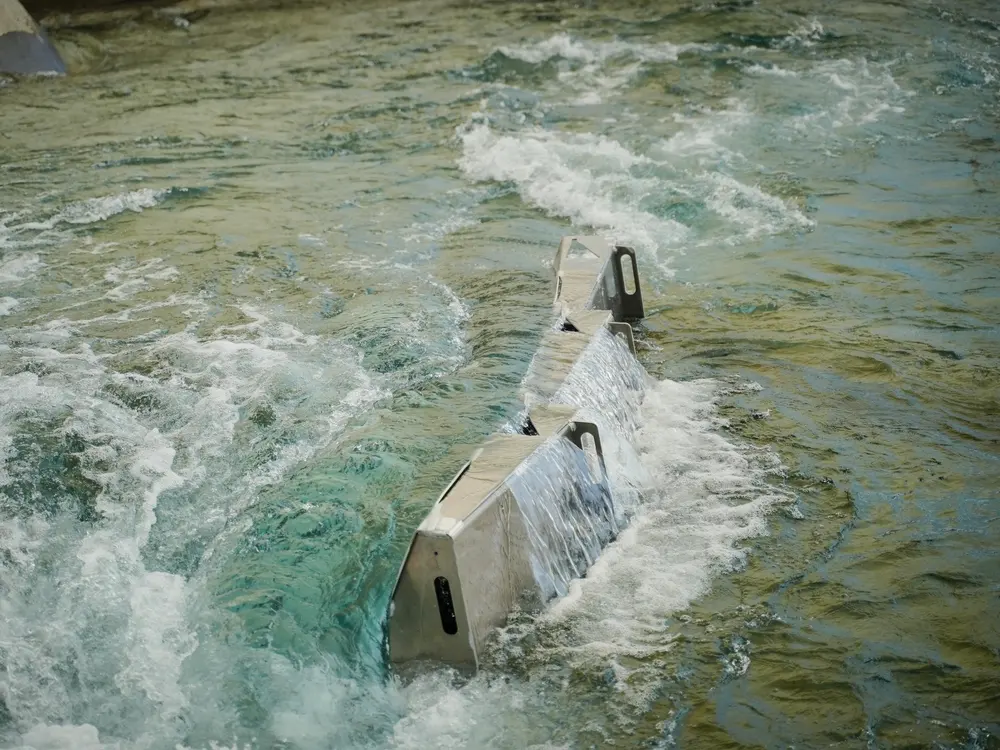
Exposure to approximately 9–12 cubic metres of fast-moving water per second
A direct impact involving six tonnes of wet clay
Static water-retention testing
Exposure to water, mud, silt and debris
Water-containment testing showing minimal penetration, where any occurred
These tests demonstrate the barrier's strength, stability and ability to perform under challenging conditions. Full test documentation is available on request.
See it in use
Photographs from practical testing: nested panels, the curved water-side face, and the barrier working in fast-moving water.
One system. Multiple threats.
Unlike single-purpose flood barriers, the GDB-1 has been developed as a versatile protection system supporting a broad range of applications. It is not just for water: rising and raging floods, land slips and slides, avalanches, sandstorms, traffic management, crowd control and bush fires — protecting valuable assets.
01 / Flood and water
Flood and water management
Rising floodwater containment
Flash-flood protection
Raging floodwater diversion
Water-flow guidance
Protection of homes, businesses, utilities, roads and essential infrastructure
Emergency preparedness is not simply about responding to an incident — it is about having the right protection in place before that incident occurs.
The barrier is designed as a long-term operational asset. Its reusable, low-maintenance construction helps organisations reduce dependence on disposable materials and maintain a system ready for deployment whenever required.
Operational value
Lower whole-of-life cost
Reduces labour, deployment time and disposal costs across repeated use.
One asset, many uses
A versatile alternative to holding several single-purpose systems.
Low maintenance
Simple to clean and return to a ready state between incidents.
Planned or emergency
Suitable for scheduled works as well as unplanned response.
Built for organisations that protect communities
A practical, adaptable and cost-effective solution for teams responsible for people, property and essential infrastructure.
Councils and local authorities
Civil Defence and emergency management
Fire and emergency services
Transport and roading agencies
Infrastructure and utility providers
Construction and civil contractors
Ports, airports and logistics facilities
Commercial and industrial operators
Farms and rural properties
Event and venue operators
Communities exposed to flooding and natural hazards
Not listed? Talk to us about your situation.
Common questions
Straight answers about the GDB-1 flood barrier — how it compares to sandbags, how it's tested, and what else it can do.
How is the GDB-1 different from sandbags?
Sandbags are single-use, labour-intensive to fill and place, and have to be disposed of afterwards. The GDB-1 is set down, linked and loaded in minutes, then retracted, cleaned and stored for the next incident.
How does a telescopic flood barrier work?
Each unit is a concave A-frame shell. Nested sections are identical profiles offset by plate thickness — not scaled copies — so they telescope out to the distance required, then retract for compact storage and transport.
Is the GDB-1 only for flooding?
No. The same system is configured for natural hazards such as landslips and sediment control, for temporary fire-control walls rated to 500°C, and for traffic management, crowd control and site separation.
How has it been tested?
Practical testing has included exposure to 9–12 cubic metres of fast-moving water per second, a direct impact from six tonnes of wet clay, and static water-retention and containment testing. Full test documentation is available on request.
How long does a GDB-1 unit last?
It carries a 20-year lifespan warranty, subject to terms and conditions, and is designed to be redeployed across many incidents rather than replaced after one use.
Be prepared before the emergency
Arrange a demonstration
See the system in action and discover how rapidly it can be deployed. Contact our team to arrange a demonstration, request technical information, or discuss how the barrier can support your organisation's emergency-response and resilience requirements.
Protect what matters. Respond faster. Be ready.
Request a demonstration
We'll respond within two business days. Technical documentation and test records available on request.